
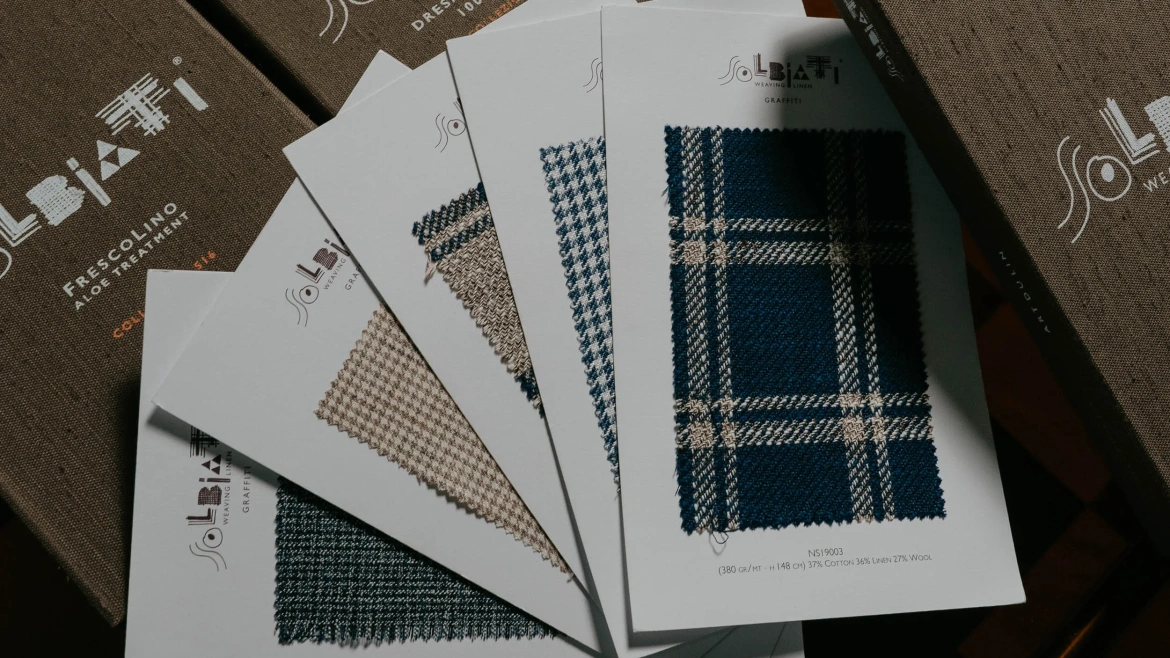
SOLBIATI 1874 – A CREATIVE JOURNEY THROUGH LINEN
A Textile Heritage Since 1874
Founded in 1874 in Busto Arsizio, northern Italy, Solbiati began as a textile mill established by Michele Solbiati, specialising in velvet and heavy cotton fabrics for workwear. Across generations, the house gradually expanded its expertise in fibres and weaving techniques before developing its distinctive identity in the world of fine linen fabrics.
When Linen Becomes Art
A defining moment came in the 1970s, when Vittorio Solbiati chose to make linen the central focus of the mill. Moving beyond its traditional natural shades and simple weaves, he introduced stripes, checks, and colour palettes more commonly associated with cotton and wool. This approach brought new possibilities to linen, transforming its image from a conventional summer fabric into a material embraced by luxury fashion houses.
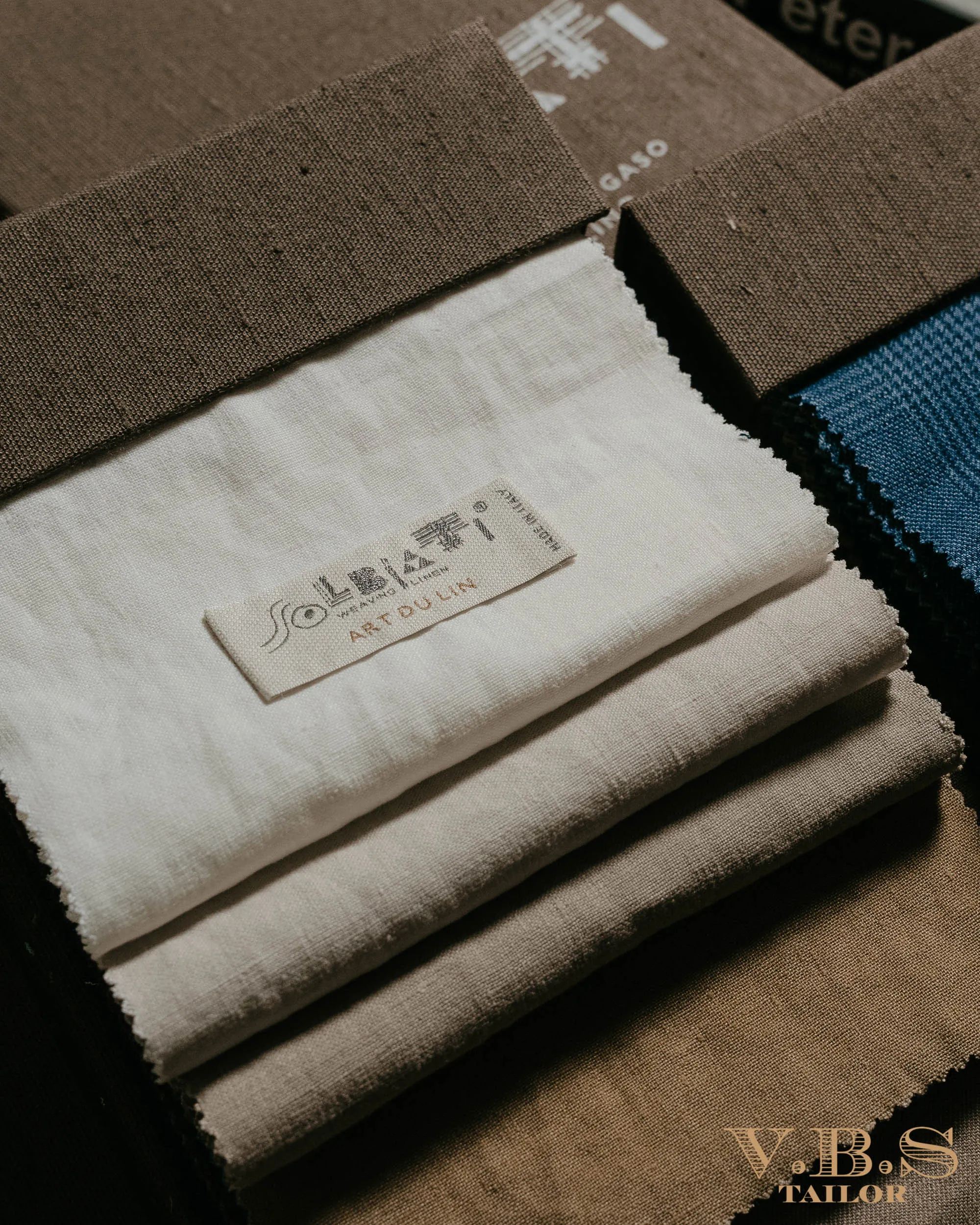
This creative vision also found expression in Solbiati’s connection with Italian design culture. During the 1980s, Bruno Munari, a prominent figure in modern Italian art and design, created the brand’s visual identity. Inspired by the structures of fibres and weaving techniques, its graphic elements reflected Solbiati’s perspective on textiles as a form of artistic expression, where colour, pattern, and texture each possess a language of their own.
Innovative Fabrics for Bespoke Tailoring
Entering the 2000s, Solbiati fabrics continued to evolve through the blending of linen with other fibres, extending their versatility across different seasons. Collections such as Art Du Lin, Prodige, and Graffiti illustrate the house’s exploration of linen, from rustic textures and natural shades to expressive patterns and intricate weaves. Blends of linen, cotton, and wool introduce variations in drape, softness, and shape retention, offering a broader range of possibilities for tailored garments.
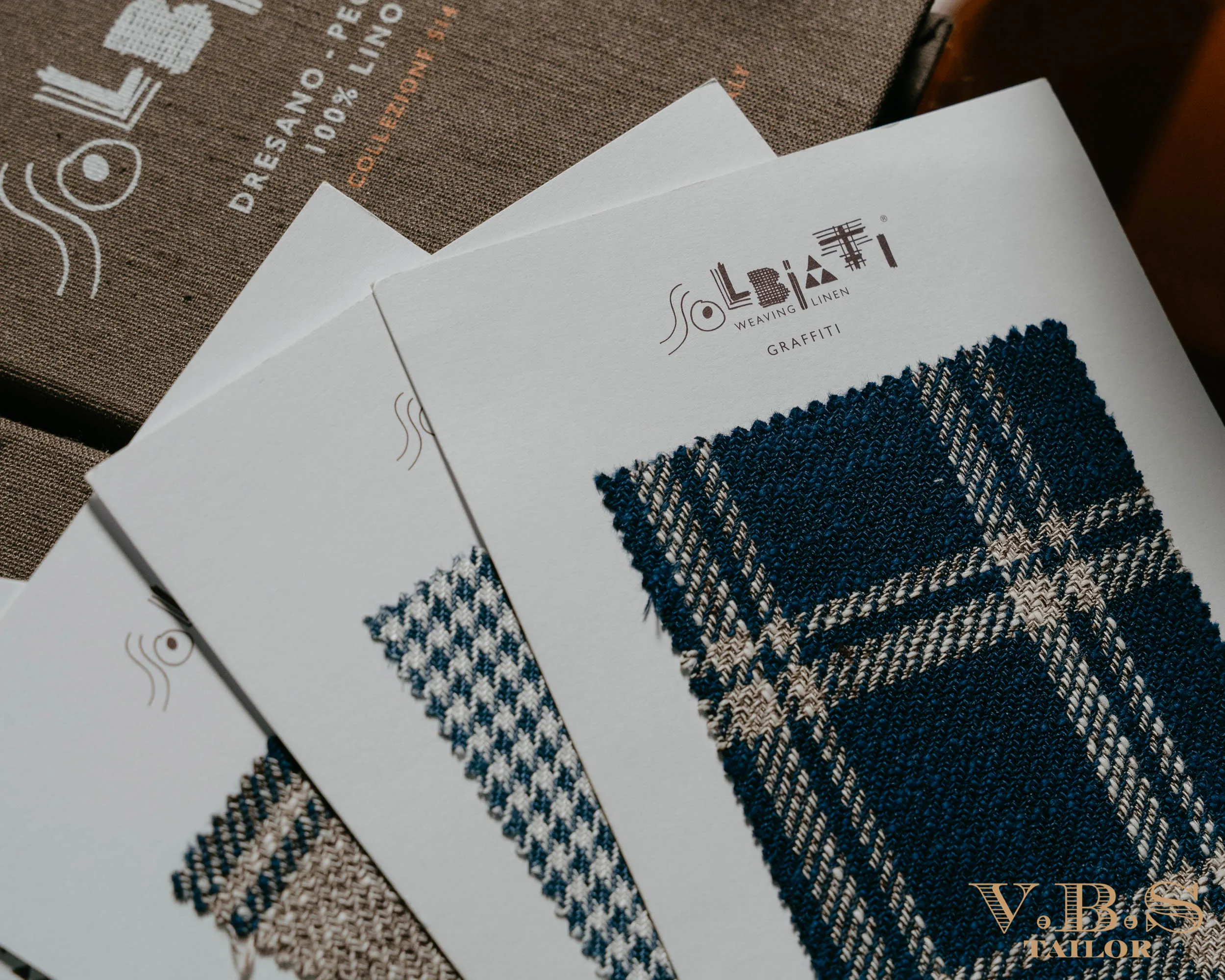
At VBS Tailor, the collections of fine Solbiati fabrics offer diverse possibilities for bespoke tailoring, from lightweight garments suited to warmer climates to jackets distinguished by expressive patterns and textures. Each fabric is considered in relation to the wearer’s physique, intended use, and personal aesthetic, shaping garments that combine precise craftsmanship with a natural sense of movement.

